

Type A and Type B influenza viruses are the primary pathogens responsible for annual seasonal acute respiratory infections (commonly known as the flu), posing a continuous challenge to global public health. Although the hospitalization and mortality rates caused by these two types of viruses are comparable, the scientific community's attention and research progress regarding the influenza B virus (IBV) have consistently lagged behind those of influenza A.
Influenza B consists of two antigenically distinct lineages: Victoria and Yamagata. Historically, this duality has been one of the factors leading to inaccurate predictions for vaccine strains. While virus strains from the Yamagata lineage have not been detected in recent years, strains from the Victoria lineage continue to cause outbreaks worldwide. From this spring to the present, seasonal flu cases in Taiwan have also been primarily caused by the influenza B virus. Therefore, developing therapeutic strategies capable of cross-strain protection has become an urgent priority for the scientific research community.

Fig. 1: HI and NT activities of 13 cross-lineage anti-influenza B HA antibodies against Victoria and Yamagata clinical strains.
Recently, a collaborative research effort led by Dr. Che Alex Ma (Academia Sinica Genomics Research Center) and Dr. Kuan-Ying Huang (National Taiwan University Hospital) identified a panel of broadly neutralizing antibodies (bnAbs) isolated from vaccinated donors (Fig. 1). These antibodies demonstrate potent hemagglutination inhibition and neutralizing activity against a wide range of IBV strains from both lineages that have circulated over the past two decades. The findings were published in PNAS on April 30, 2026.
The study highlighted two standout antibodies, BP-1A and BO-6B, which exhibited the broadest neutralizing profiles and conferred protection in in vivo mouse models. Using cryo-electron microscopy, the team characterized their distinct epitopes on the influenza B hemagglutinin (HA) head:
- BP-1A: Neutralizes the virus by mimicking receptor sialic-acid binding at the HA head region (Fig. 2).
- BO-6B: Targets the vestigial esterase domain, a region distinct from the receptor-binding site.

Fig.2: Cryo-EM structures of BP-1A with HA proteins from influenza B virus, mimicking receptor sialic acid-binding.
Notably, the research revealed that BO-6B not only binds to the viral protein surface; it also locks onto the glycan shield at the N145 glycosylation site. This specific glycosite consists of high-mannose N-glycans that are highly conserved across both IBV lineages (Fig. 3). While viruses typically utilize glycan shields to hide themselves from the immune system, this study demonstrates that these sugars can be effectively targeted.

Fig.3: Cryo-EM structures of the influenza B HA (vestigial esterase and N145 glycan) in complex with BO-6B and the N-glycosylation profiles of influenza B HA
While receptor mimicry is a known strategy for HA-head antibodies, this direct glycan engagement in immune recognition has not been previously reported for either influenza A or B. This study represents a significant leap in our understanding of influenza B immunity and provide insights for universal flu vaccine design.
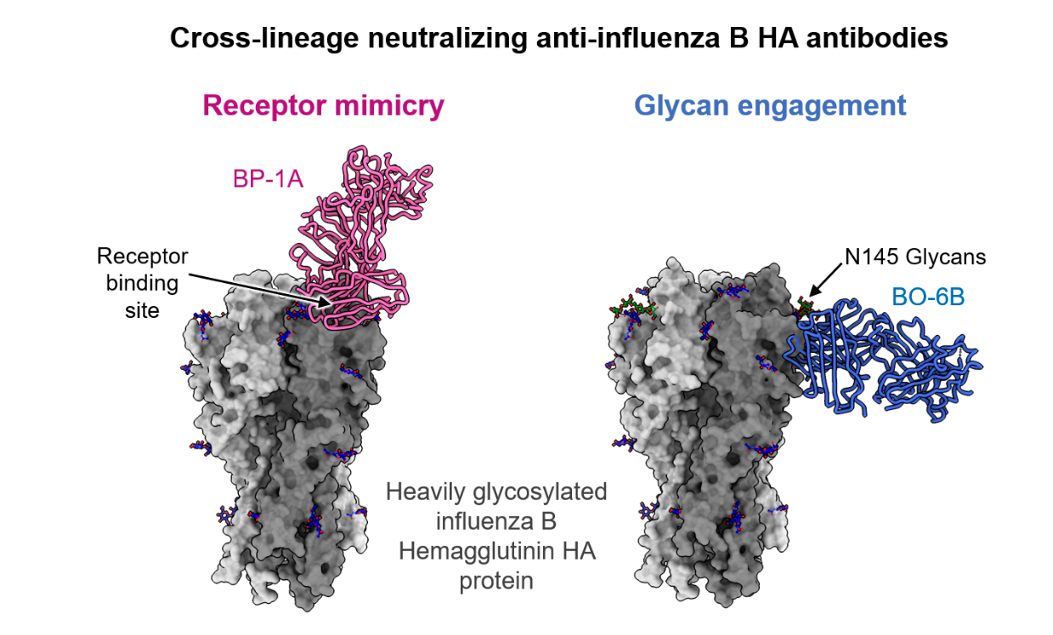
Fig. 4: BP-1A and BO-6B, cross-lineage neutralizing anti-influenza B HA antibodies
First authorship on this study is shared by Dr. Kuan-Ying Huang and postdoctoral researcher Dr. Hong Thuy Vy Nguyen, co-authors include Dr. Yi-Yin Chen (NTU), Kai-Jung Wu (NTU), Po-Hsien Hsu (GRC), Dr. Yo-Min Liu (GRC), Dr. Tzou-Yien Lin (CGU). The full paper, titled “Broad neutralization of influenza B hemagglutinin antibodies via receptor mimicry and glycan engagement”, can be accessed with the following link: https://doi.org/10.1073/pnas.2532989123