

After twenty years of dedicated research, a cross-disciplinary team from Academia Sinica and National Taiwan University (NTU) Hospital has announced a major breakthrough in oncology. The team has successfully developed PanMETAI, a revolutionary AI-powered foundation model designed for the early detection of pancreatic cancer, recently published in the prestigious journal Nature Communications, titled "PanMETAI: A High-Performance Tabular Foundation Model for Accurate Pancreatic Cancer Diagnosis via NMR Metabolomics."
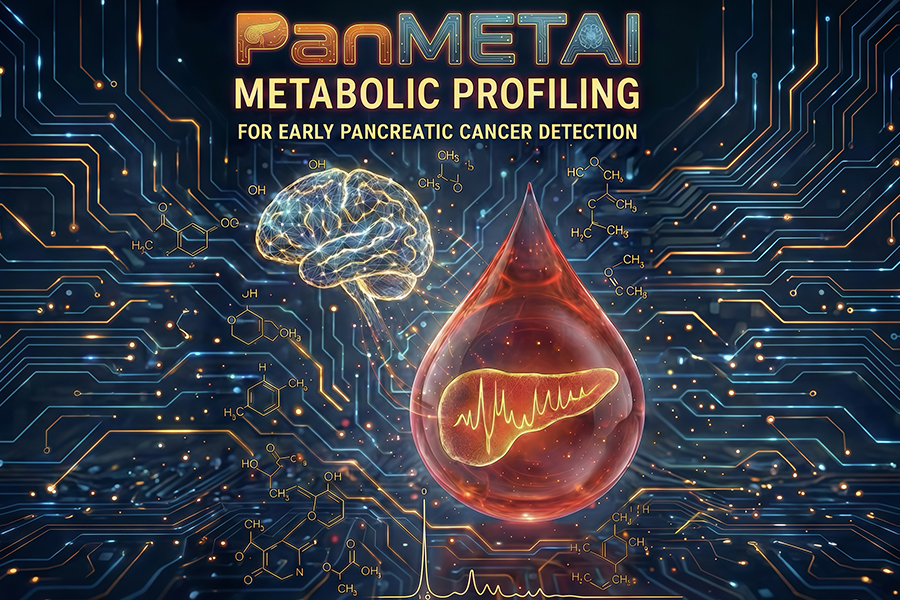
Figure 1: PanMETAI technology integrates Artificial Intelligence (AI) with metabolic profiling, facilitating early diagnosis of pancreatic cancer.
Pancreatic cancer has long been considered the "King of Cancers" due to its asymptomatic nature in early stages. With most patients diagnosed only at an advanced phase, the five-year survival rate remains a dismal 13%. PanMETAI aims to change this trajectory through early precision screening.
AI Detective: Sifting Through 260,000 Signals
Operating like a high-precision detective, PanMETAI utilizes a highly standardized Nuclear Magnetic Resonance (NMR) analysis platform to identify molecular traces of cancer:
- Massive Data Analysis: The AI foundation model (TabPFN) systematically extracts key molecular features from as many as 260,000 data points per examinee.
- Capturing Early Pathological Changes: Unlike current clinical tools that rely on single biomarkers, PanMETAI captures the holistic metabolic characteristics from pre-cancerous stages to early lesions, filling a critical gap in early risk assessment.
Global Validation across Taiwan and Europe
The research team verified PanMETAI’s diagnostic reliability through rigorous blind testing and international validation. The model delivered outstanding results across distinct populations:
- Taiwan Independent Blind Test: Achieved a remarkable Area Under the Curve (AUC) of 0.99, with a sensitivity of 93% and specificity of 94%.
- European Cohort Validation: Maintained a high AUC of 93% in a Lithuanian cohort, confirming its effectiveness across different ethnicities and geographic regions.
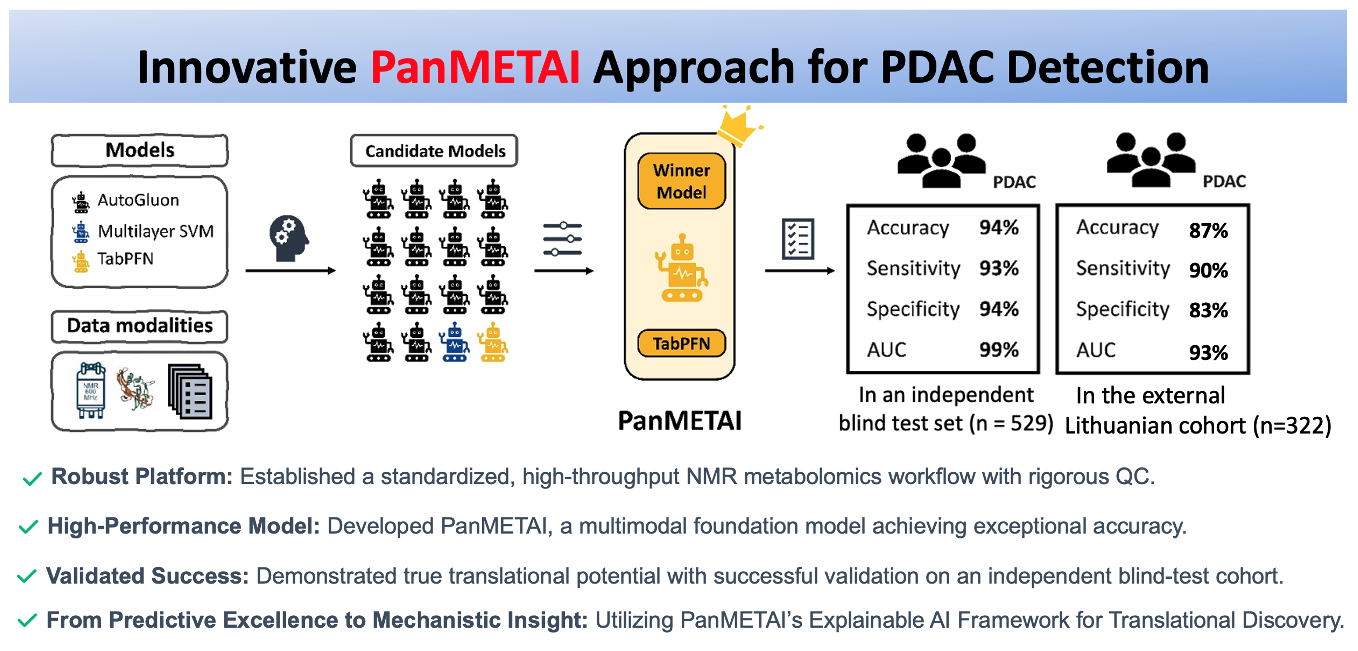
Figure 2: The Innovative PanMETAI Approach and Performance Metrics. The workflow utilizes a standardized NMR metabolomics platform to select the optimal foundation model (TabPFN), PanMETAI. The model demonstrates robust diagnostic power across both domestic and international validation cohorts.
A Lifesaving Cross-Disciplinary Achievement
The development of PanMETAI is the culmination of over twenty years of clinical expertise from NTU Hospital, combined with Academia Sinica’s long-term investment in fundamental research, metabolomics, and theoretical computational science.
The research team expects PanMETAI to serve as a vital screening tool for high-risk individuals. Looking forward, this AI architecture could be expanded into a "Multi-Cancer Early Prediction Platform," paving the way for the next generation of precision medicine.
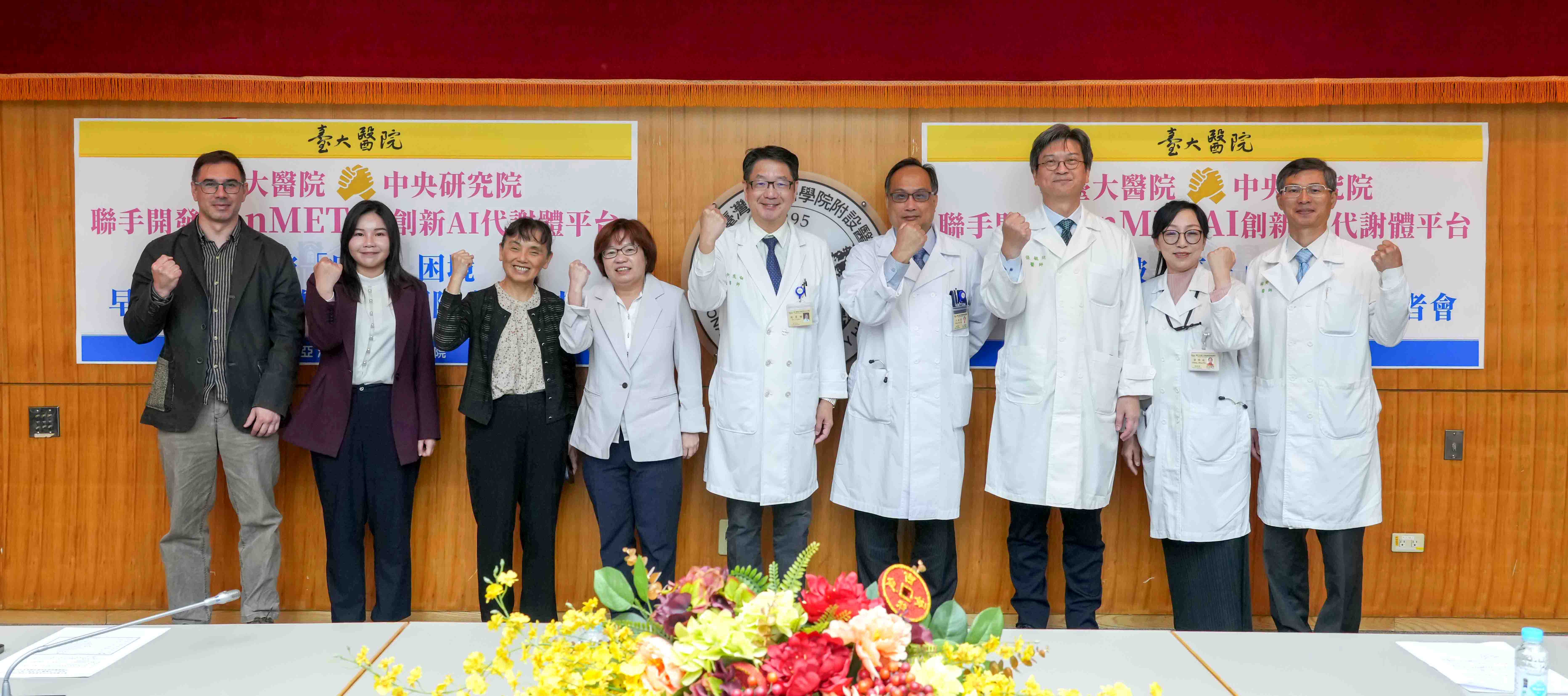
Press Conference Photo, February 26, 2026 (Photo credit: NTUH)
The study’s first author is postdoctoral fellow Dan-Ni Wu (Genomics Research Center, Academia Sinica). The corresponding authors are Professor Yu-Ting Chang (NTU Hospital), Distinguished Research Fellow Chao-Ping Hsu (Institute of Chemistry, Academia Sinica), and Assistant Research Fellow Chun-Mei Hu (Genomics Research Center, Academia Sinica). The full paper is available for online reading at: https://www.nature.com/articles/s41467-026-69426-9
Related Resources:
NTUH NEWS
Asia Research News: AI blood test detects pancreatic cancer early with more than 90% accuracy